

News
‘We should get the 10 people who can make this happen and stick them in a room,’ says Arqiva CEO Simon Beresford-Wylie.
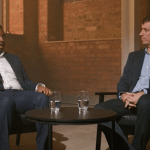
Europe is pinning its hopes on 5G when it comes to regaining leadership of the global telecoms sector, but for Arqiva CEO Simon Beresford-Wylie, that opportunity is already slipping away.
During a panel session at Connected Britain on Wednesday, he reminisced about how Europe "gave the world GSM," and followed it up with WCDMA.
15-20 years later, and "the U.K. and European sector is not in rude health," Beresford-Wylie said, attributing its decline to cash-strapped telcos not making the necessary investments in new network technology.
He does not expect the situation to change any time soon either.
"The idea that Europe is marching to 5G leadership is a little on the delusional side," he said.
The European Commission’s 5G Public Private Partnership (PPP) has set out to ensure that Europe plays a key role in developing the next generation of mobile technology, while operators and vendors throughout the continent are engaged in tests and trials of prospective 5G technology.
"As I see it, there’s a disconnect between aspiration and execution," Beresford-Wylie said.
One of the major hurdles, he said, is the scale of network densification that needs to happen and all the challenges that come with that.
He claims that in order to provide a city like London with the kind of capacity promised by 5G, mobile operators will have to deploy 350,000-500,000 small cells. By comparison, today, London is served by 4,000 macro sites.
"There aren’t enough lamp posts" to support that kind of deployment, he said, which means small cells will have to be installed on the sides of buildings and connected to backhaul networks, which requires more planning and conversations with landlords, all adding up to high cost and complexity.
In order to solve issues like these and help Europe and the U.K. retake the initiative in 5G, "we should get the 10 people that can make this happen and stick them in a room," Beresford-Wylie said.
When pressed about who in the U.K. should be in this room, he listed Ofcom; the Department for Culture, Media and Sport; the National Infrastructure Commission; the U.K.’s four MNOs; and Arqiva, of course.
"We need a room and a list of things we need to do," he said.