
Contributed Article
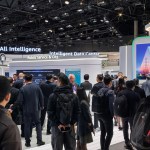
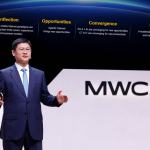
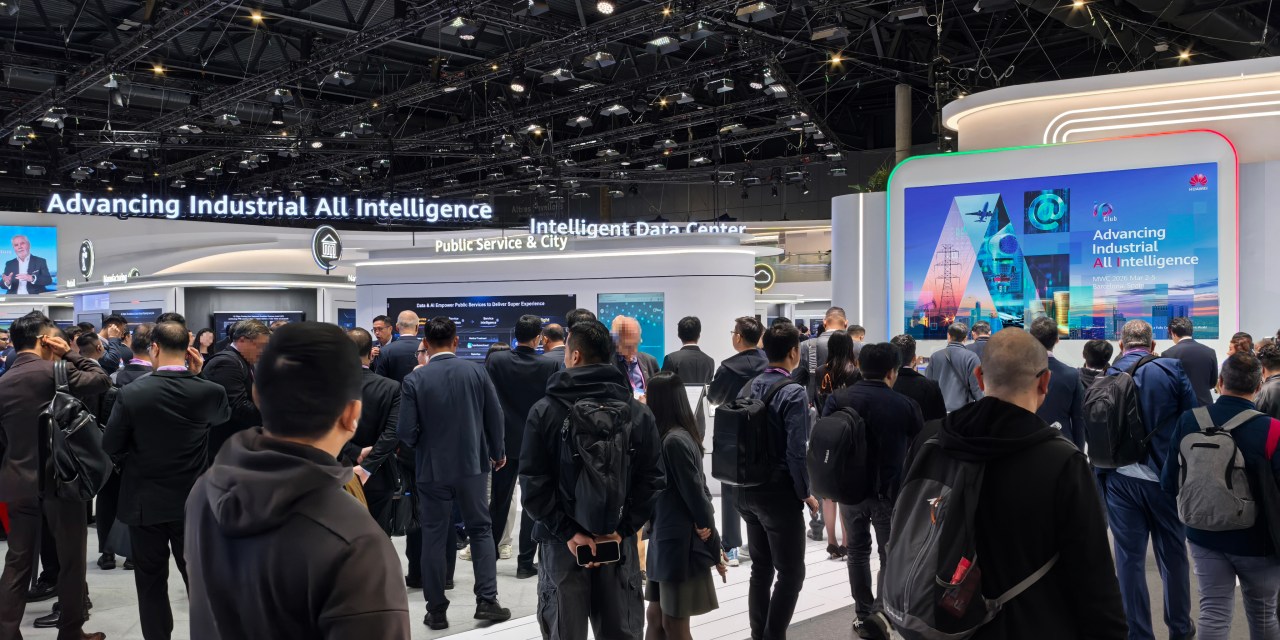
At the Industrial Digital and Intelligent Transformation Summit at MWC 2026, Huawei explored how AI will soon be integrated throughout core production environments, necessitating a fundamental shift in how industries operate
AI is maturing at a blistering pace, heavily disrupting businesses around the world.
First, agentic workflows have matured, allowing AI agents to move beyond simple prompts to predicting and executing complex tasks. Second, the rise of physical AI allows digital intelligence to understand and interact with the physical world, making autonomous decisions that impact real-world infrastructure.
Embracing the ACT framework
To overcome the bottleneck for current large-scale industrial adoption barriers, Huawei introduced the ACT pathway, a blueprint designed to bridge the gap between pilot projects and full-scale industrial intelligence:
- A: Assess high-value scenarios. Companies must evaluate business value, scenario maturity, and technical readiness. Huawei has already identified over 1,000 core production scenarios across industries where AI can play a big role.
- C: Calibrate AI models with high-quality vertical data. Huawei has built a 6-layer AI security framework to ensure every stage of the AI lifecycle is secure and trustworthy.
- T: Transform business operations with AI talent. Talent that understands both industry and AI are needed. The final pillar focuses on organisational change, advocating firms to cultivate “bilingual” talent capable of translating industrial challenges into AI solutions.
By embracing these principles, industries can finally unlock the true economic potential of the “Industrial All Intelligence” era.
Huawei’s SHAPE 2.0 partner framework receives an AI makeover
For Huawei, facilitating this industrial AI transformation has required a fresh approach to how the company collaborates with partners.
Its SHAPE 2.0 partner framework, has received a significant update, infusing AI throughout the process:
- AI-powered products. Huawei is embedding AI directly into infrastructure and solutions (e.g., network agents that automatically detect faults and optimise networks).
- AI-based joint innovation. Partners can co-develop AI applications and agents using Huawei cloud platforms such as AgentArts.
- AI capability development for partners. Huawei has released a set of standards for AI capabilities and launched over 20 new AI certification courses. It is aiming to help over 1,000 partners get AI-certified.
- AI-assisted partner collaboration. AI tools improve partner operations (e.g., AI-assisted configuration, AI chat support, and automation tools).
- AI-driven growth opportunities. The ecosystem targets new revenue opportunities through industry-specific AI solutions across sectors like energy, finance, transport, and retail. Huawei has deployed over 3,000 scenario-specific AI experts, with ‘intelligent transformation lighthouse projects’ across 38 industries.
Huawei reveals 115 global industrial showcases
The ACT and SHAPE 2.0 partner frameworks are already bearing fruit. At MWC, Huawei presented 115 global showcases for industrial intelligence, as well as 22 of its latest industrial intelligence solutions jointly developed with partners in diverse array of sectors.
Some of these partners were present at the summit itself, including Eskom, Shandong Port Group, Converge ICT, HM Hospitales, and PetroChina (Beijing)’s Digital Intelligent Research Institute (CNPC). These varied companies took to the stage to share their journeys so far, including battling with legacy infrastructure and pressure to move quickly.
“How do we develop AI for an organisation that’s 100 years old and needs to update its infrastructure to support everyone? We have a big road to walk,” explained Len de Villiers, CTIO of Eskom, the energy company that supplies 98% of South Africa.
For de Villiers, the answer lies in a culture of focussed experimentation.
“All staff at Eskom are experimenting with AI, within specific guardrails,” said de Villiers. “We’re making sure AI is carefully directed and not inhibited.”
“It’s very important to be selective based on the business cases,” he added. “Ask your leadership team and your experts to give you their priorities.”
For Eskom, these priorities are closely linked to their strategic turnaround plan, aiming to pursue financial and operational sustainability, and to modernise power system and energy transition.”
For Ng Wun-kit, Principal of Pui Kiu Middle School in Hong Kong, China, AI has already become a core focus throughout the education process.
“AI is not seen as a tool, but the very operating system of the school,” he explained, emphasising that incorporating AI is vital for both modernising the learning environment and equipping the next generation with crucial digital skills. Having already deployed an AI General Knowledge Course, AI-Empowered Smart Classroom, and Smart & Safe Campus, Pui Kiu Middle School is increasingly capable of delivering personalised learning for students.
“We are producing a factory of knowledge, moving from a standarised education to personalised learning. We’re moving from passive learning to interaction,” Ng said.
For Huawei, deploying the right infrastructure solution to meet their specific needs is crucial.
The shift from AI as an experimental tool to a foundational “operating system” marks a critical turning point for both industrial efficiency and workforce development. By bridging the gaps in data, talent, and integration through the ACT and SHAPE 2.0 partner frameworks, Huawei and its partners and customers are transforming “all intelligence” from a visionary concept into a scalable, high-value reality.
Also in the news
World Communication Award Winners 2025
Ofcom clears the way for satellite-to-smartphone services
LG Uplus’s AI voice call app glitch leaks user data