

Rolling out fibre-to-the-home (FTTH) to rural areas is expensive and difficult for a telco, so we’re told, which is why folks living in the sticks have to make do instead with cheaper alternatives like fibre-to-the-cabinet (FTTC), ADSL, or two tin cans and a length of string.
"Rural broadband is not economical and can’t be done? Rubbish! You just have to do it differently," declared Barry Forde, CEO of Broadband for the Rural North (B4RN), a community-led project that has built a gigabit FTTH network in rural Lancashire in northwest England.
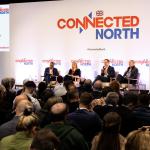
Last week, Forde was awarded an MBE in the Queen’s birthday honours list for services to superfast broadband in rural communities. This week, he took to the stage at Connected Britain to talk about the work he undertook that e ventually culminated in this royal recognition.
B4RN offers 1 Gbps broadband for £30 per month to residential customers and SMEs with fewer than five employees. 10 Gbps broadband is also available for larger businesses if required.
The network is live in 27 rural parishes with populations ranging from the low thousands to the low hundreds.
So how did B4RN pay for a network that puts BT Infinity and Virgin Media to shame?
"You can try the banks but they’ll laugh at you," said Forde. Instead, B4RN established itself as a cooperative telco, and raised the bulk of the money it needed to get started – around £1.3 million – by issuing shares, taking out loans, and through donations.
To keep costs to a minimum, B4RN created a network of community leaders spread across the region who helped to form an army of volunteers who received training in fibre installation. Ducts were installed underground across private land, such as farmers’ fields and gardens, wherever possible in order to avoid the time and expense of digging up roads.
"Broadband as a community project is driven by tea and buns," Forde said.
As word spread, adjacent communities got involved and to date, 500 miles of fibre has been deployed. B4RN leases a fibre connection to a Telecity data centre in Manchester. From there, it connects to the EDGE-IX and IX-Manchester peering points.
Incredibly, B4RN’s numbers add up.
The cost per premises was estimated at £1,000, "but it’s closer to £750, which is not out of line with Virgin Media," said Forde.
1,000 connections covers all of B4RN’s operating costs. "We hit 1,050 in May," Forde said.
In addition, with a 50% take-up rate, B4RN would expect to finish paying for the network by 2024. The take-up rate today stands at 67% and climbing, Forde said.
"We haven’t lost a single customer," he continued. "They haven’t got an ything to migrate to!"
At this point, you might think that B4RN is a special case, but there are others out there who, like Forde, feel left out by the big telcos so they have rolled up their sleeves and taken it upon themselves to get the job done.
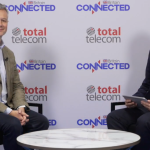
"We expect to go live in a fortnight’s time in the first three of nine villages," Ken Otter, ultrafast FTTH broadband champion and campaigner, told Total Telecom on the sidelines of Connected Britain.
Otter lives in the village of Tallington, in Lincolnshire, near Peterborough and the border with Cambridgeshire.
With a population below 1,000, no nearby cabinets, and being located on a boundary between two counties, Tallington and its neighbouring villages find themselves firmly in the final 5% that BDUK – the government body tasked with spending public money on rural broadband – does not reach.
Unlike B4RN, which covers a lot of farming country, the economy in and around Tallington is "more paper-based," Otter explained, meaning it lacks the farmers and farming equipment that would have enabled local volunteers to dig the fibre themselves.
So rather than go the whole hog and build his own FTTH network from scratch, Otter and his co-conspirators set about seeding demand so they could attract attention from an outfit that would.
That outfit was Gigaclear, which deploys fibre infrastructure in rural communities that can prove that high-speed broadband is very much in demand.
Before it spends any money, Gigaclear requires 30% of premises to sign up to the network. For Otter, that meant 300 residents minimum.
"We got 450, which was very encouraging," he explained. By the time Gigaclear sent representatives to his village to gauge interest, Otter and his associates had already spread the word throughout the community.
"Gigaclear only needed to knock on the door and people already knew about them, and signed up on the spo t because we had seeded the market," he said.
The company located a nearby fibre backhaul network and set about signing up other villages in the area.
When the network goes live in around two weeks’ time, early adopters will be able to get 100-Mbps broadband, while latecomers will get 50 Mbps for the same price. A more expensive, 1-Gbps service will also be offered.
"Putting in FTTH is the equivalent of putting in a water supply," in that it is now a necessary service, Otter said. "The government wants to put everything online," which means people living in rural areas without broadband will be left behind.
"We’re taking it upon ourselves to bridge the digital divide," Otter continued. "It takes perseverance, not accepting words like ‘no’ and ‘can’t’, and always asking, ‘why not?’"