

BYE BYE C&W
Liberty Global announced a $8.2 billion deal for Cable & Wireless Communications in November, potentially signalling the end of the road for one the oldest companies in the industry.
DIRECT DEAL DONE
AT&T closed its $48.5 billion acquisition of DirecTV. It plans to launch new integrated products and pricing packages in January.
VERIZON BUYS AOL
Verizon spent $4.4 billion on the acquisition of AOL, indicating its interest in both its content and advertising assets.
SUBCONTINENTAL MERGERS
Consolidation came to the Indian subcontinent in November. India’s Reliance Communications agreed to take control of Sistema Shyam Teleservices (SSTL), while in Pakistan Mobilink moved for Warid Telecom.
LAP OF THE GODS
BT has returned to the mobile sector, signing up more than 200,000 customers since launching an MVNO service on EE’s network in March. The launch came less than a month after BT finalised a £12.5 billion takeover of the aforementioned operator. Presuming the deal passes all the requisite regulatory tests–the Competition and Markets Authority (CMA) gave its preliminary blessing in October–the UK incumbent will enter a market in a state of flux.
Hong Kong’s Hutchison agreed a £10.25 billion deal in March to buy Telefonica’s O2 UK and merge it with 3UK, thereby reducing the number of mobile networks to three from four and creating a new market leader with around 33 million customers. However, there are doubts over whether the merger will get the nod from the European Commission. The prognosis is not great, given that staunch regulatory opposition led TeliaSonera and Telenor in September to abandon plans to merge in Denmark. Hutchison has succeeded in gaining approval for mergers in other European markets, but that was during the reign of the EU’s previous competition commissioner, Joaquín Almunia. Ofcom’s new chief executive Sharon White did little settle the nerves. In October, White reiterated the UK regulator’s position that "four operators is a competitive number that has delivered good results to consumers and sustainable returns for companies." She warned that consolidation in the UK could lead to higher prices and reduced choice for consumers.
DOWN MEXICO WAY
AT&T completed the acquisitions of Iusacell and Nextel in Mexico and has started work integrating the businesses and offering cross-border tariff plans, something its rivals on both sides of the frontier have since emulated. Mexico is also working on a $7 billion share d mobile network project and plans to auction AWS spectrum in January. On the fixed side there was consolidation; conglomerate Alfa inked a deal to combine its Alestra business services operator with fixed-line telco Axtel. 2016 will be an interesting year in Mexico.
4G TAKES OFF IN CHINA
China Unicom and China Telecom received FDD LTE licences this year, enabling them to offer full 4G services. China Telecom had almost 44 million 4G customers by the end of September, but Unicom does not share figures. China Mobile, which had a head start, still leads the way though, with 267.3 million 4G subscribers as of the end of October.
BUYING AND SELLING IN CANADA
It has been a busy year in Canada. Rogers brokered a C$465 million deal for Mobilicity to finally bring consolidation to the mobile market; the telco also gained a data centre with the acquisition of Internetworking Atlantic. Meanwhile, MTS announced the sale of its Allstream business to US fibre operator Zayo also for C$465 million. The country’s operators have also been spending on spectrum. March’s AWS-3 auction raised C$2.1 billion, while a 2.5-GHz sale in May brought in C$755 million.

LIGHTSQUARED’S COMEBACK
LightSquared finally exited Chapter 11 in December and brokered a deal with GPS providers that should enable it to roll out a wholesale mobile network in the US.
CHINA TOWER
China’s big three telecoms operators transferred their towers assets into a new joint venture, China Tower.
ALL CHANGE FOR OI
Oi closed the sale of Portugal Telecom to Altice in June and by th e end of the year was closing in on TIM Brasil. It is holding exclusive talks with investment group Letter One on the subject.
PROJECT FI
Google in April launched its WiFi-first Project Fi MVNO service in the US. The service uses Sprint and T-Mobile’s cellular networks where WiFi is unavailable.
5G: IT’S OFFICIAL
The ITU chose IMT-2020 as its official designation for what will one day be standardised as 5G.
BOARDROOM BLITZ
Vivendi is making its presence felt at Telecom Italia. Having built up a stake of around 20.5% in the Italian incumbent, the French media group is starting to exert pressure at board level. At a shareholder meeting in December, Vivendi won the right to appoint four new members to Telecom Italia’s board. Vivendi also blocked a savings share conversion plan that would have resulted in the dilution of its stake.
Vivendi is not the only new Telecom Italia investor that could potentially have a say in its strategy. French businessman Xavier Niel–who has built up a long optional position of 15.14%–is monitoring the situation and will "review a wide variety of investment considerations," including Telecom Italia’s operations, assets, prospects and business development. With mobile consolidation on the horizon due to Wind and 3 Italia’s proposed merger, and with doubt still hanging over Telecom Italia’s continued presence in Brazil, there will be plenty for Vivendi and Niel to think about in 2016.
IDENTITY CRISIS
A number of major players in the telecoms space are ending 2015 with a new identity. For many, the change was driven by a desire to shake off the legacy incumbent brand in favour of something more suited to a mobile and multi-screen future. Belgacom became Proximus early in the year, Telecom Italia adopted the TIM name for all its retail operations in July, and Greece’s OTE announced its intention to bring together its fixed, Internet and mobile operations under the Cosmote name in September. That same month, Ireland’s Eircom relaunched as Eir for similar reasons; the new name better reflects the changing nature of the telecoms industry, it said.
For others, a name change came about as a result of M&A. Orange Switzerland became Salt in April, shortly after it was acquired by Xavier Niel. AT&T is in the process of rebranding its newly-acquired Mexican businesses to AT&T. And a year after it took 100% control of its Indian unit, Telenor dropped the Uninor brand in favour of the group monicker.
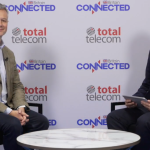
It is too early for BT and EE to think about their post-merger brand though. The question of whether the merged entity will continue with a multi-brand strategy or adopt a single name will be decided "in due course," EE CEO Olaf Swantee said at the Total Telecom Festival in December. "It’s quite an important decision, but it’s not an urgent decision."
ACTIVE ORANGE
Orange became sole owner of Spain’s Jazztel and upped its stakes in Mobinil in Egypt and Morocco’s Meditel. It exited Kenya and Armenia.
AUCTION ISSUE
Dish won spectrum in the $44.9 billion US AWS-3 spectrum auction, but later handed back some airwaves after the FCC ruled it was ineligible for discounts.
ON BASE
Liberty Global’s merger talks with Vodafone fell apart, but the US group agreed to buy Belgium’s Base from KPN for €1.33 billion and Ireland’s TV3 for €80 million.
EURASIAN OPS
TeliaSonera aims to sell its Eurasia operations–partner Turkcell has made an offer for fo ur of them–and Telenor plans to offload its 33% stake in Vimpelcom.
CABLE MEGA DEALS
No sooner had Comcast abandoned its $45.2 billion plan to acquire Time Warner Cable (TWC) than Charter swept in with a $56.7 billion deal of its own. It is planning a three-way merger, including Bright House, which it agreed to buy for $10.4 billion earlier in the year. Meanwhile, French cable group Altice is due to arrive in the US, having agreed to acquire Suddenlink and Cablevision. It also has half an eye on Cox Communications.
FOUR IS THE MAGIC NUMBER
Four-player mobile markets are proving a key topic of discussion across Asia. Singapore is due to auction spectrum in various bands in 2016 and regulator the IDA has proposed reserving airwaves for a new entrant. There has also been talk of a fourth player in South Korea, where the government is keen to stimulate additional competition. And Myanmar is working on licensing a fourth mobile operator.
EUROPE EMBRACES 700 MHZ
Germany became the first country in Europe to auction 700-MHz spectrum, raising just over €1 billion from the sale of 30 MHz of bandwidth to Deutsche Telekom, Vodafone and Telefonica. France followed suit, generating €2.8 billion for the same amount of spectrum from Orange, Free Mobile, Bouygues Telecom and SFR. The UK government, meanwhile, pledged to spend £550 million over five years to clear the 700-MHz band for mobile broadband. The ITU allocated 700 MHz for LTE use in Region 1 at WRC-15 in November, thereby globally harmonising the band.