

Things were a little different at Mobile World Congress this year.
One financial analyst, who was attending Congress for the first time, chose to spend the first night of the show in his hotel room, rather than hitting the town.
His evening involved "wine, a keycard, and a large amount of butter," he confessed. I could tell you the real story, but what you’re imagining is probably equally entertaining.
This was to be no ordinary week in Barcelona, as further evidenced by Mark Zuckerberg’s keynote address on Monday.
The Facebook founder lauded the telco community for investing "tens of billions of dollars a year" in the networks that underpin his service. "The real companies that are driving this are the operators," rather than the likes of Facebook and Google, he said.
That’s an interesting comment from someone who previously gave the impression that he thought networks sprang up overnight, as a gift from the infrastructure pixies.
There was also a surprise announcement from Google, which indicated that it is working with unnamed carrier partners to roll out a mobile virtual network operator (MVNO) service in the U.S. Despite the fact that the Internet giant insists it "doesn’t intend to be a network operator at scale"," the move must raise concerns for U.S. telcos. That said, there are unconfirmed reports that Sprint and T-Mobile have agreed to let Google use their networks, so maybe there is more of an opportunity than a threat.
And in a sign that the times really are a changin’ in the mobile space, a packed auditorium listened to a top executive complain that regulatory bodies are holding back technology…in the automotive space.
The first wave of self-drive cars will come to market as early as next year, Carlos Ghosn, chief executive of the Renault-Nissan alliance, predicted. "The technology’s ready. We just need the regulators to accept the technology," he said.
Fully driverless cars are probably about 10 years away, Ghosn said.
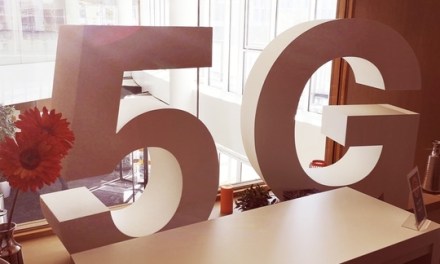
Autonomous driving was a much-discussed topic at the show, in no small part because it will require the massive latency and speed improvements that will come with the next generation of mobile technology: 5G.
With 1 millisecond latency, 5G will enable a self-drive car travelling at 100 km per hour to stop in "just 2.5 seconds" when the brakes are applied, Huawei’s rotating CEO Ken Hu said. "[That’s] comparable to ABS."
The next generation
The 5G hype was everywhere, from EU digital economy commissioner Günther Oettinger’s high-level vision of the next-generation of mobile technology, to the use of millimetre wave frequencies for 5G access.
Everyone had an opinion on the timeframe in which we can expect 5G to come to market, and it quickly became clear that Europe is unlikely to be in the first wave of launches. KT Corp is working towards a trial launch in South Korea in just three years with a view to commercialising 5G by 2020. But the EU predicts the first 5G networ ks will go into operation in the 2020-2025 timeframe and Orange CEO Stephane Richard urged the industry to slow down on 5G.
"We must not jump too fast into the next generation of networks," he insisted. "Let’s enjoy 4G LTE."
Richard warned the audience of the dangers of trying to bring a new mobile system to market too quickly, without adequate preparation. "We should remember what happened with 3G," he said, referring to the years of delay that came before the technology launched and to the general disappointment with early 3G services.
Speaking of current generation services, a number of the telcos used MWC 2015 to present their latest developments.
Telekom Austria worked with ZTE and Kaifa to give us Europe’s first LTE smart meter; Telefonica presented FiLIP, a smartwatch designed to help parents locate their children; and Ooredoo formally launched its business services unit, which it claims comes with a revenue opportunity of up to US$10 billion per year.
The telcos also tackled data privacy and security. The opening keynote saw the CEOs of some of Europe’s biggest operators – Vodafone, Deutsche Telekom, Telefonica and Telenor – take a brief break from the sharing of their regulatory woes to discuss their role in helping customers protect themselves.
And later in the week the CEO of Telefonica’s R&D arm, David del Val, shared some of the measures his company is taking, as part of its work as a founder member of the Data Transparency Lab (DTL), to increase transparency about how data is used online.
Plus ça change
Roaming is a perennial theme at Congress, partly because the bulk of the tens of thousands of attendees – I’ve heard talk of 93,000 this year, yikes – spend a lot of time desperately seeking WiFi networks to avoid being slapped with a big bill for data usage.
Syniverse was on its soapbox about roaming this year, warning that mobile operators stand to lose their high-value customers, and billions in revenues, if they don’t make an effort to develop roaming packages that make sense to consumers. Norway’s Telenor appeared to be getting with the programme, announcing plans to introduce new data roaming packages across its footprint, although its goal is primarily to target customers that usually switch off their phones when travelling overseas.
Naturally, there were numerous device launches at the event, although this year there was a greater focus on wearables than ever before.
Huawei’s consumer business press conference presented three devices, all wearables, including the Huawei Watch that is due to hit the shelves mid-year. There were also a couple of new devices from its Honor smartphone range.
For Samsung it was all about competing with Apple with a pair of high-end smartphones, the Galaxy S6 and S6 Edge. HTC’s launch event concentrated on its new HTC One M9 smartphone, although the Taiwanese firm also presented its first wearable device, the HTC Grip. And Microsoft launched two mid-range smartphones and prev iewed the upcoming Windows 10 platform.
After a few years of covering Mobile World Congress, the events start to blur into one and patterns emerge.
We’ve always talked about the distances travelled on the show floor, but the past few years have added wristband technology into the mix, so now people tell you exactly how many steps they took and how far they walked. Queues for taxis and trains are getting longer: waiting for a cab after the show took two hours some days, but for many that was still a preferable option to being kettled on the public transport system. And as most of us are now back home or en route, we are left to catch up on some sleep and worry about our dangerously high jamón levels.
Until next year!