"Disrupt yourself…or die!"
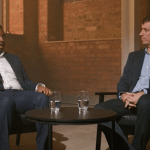
In Portugal this week a Dutchman made a group of telecoms executives put down their pasteis de nata and pay attention to a stark message: big corporations must embrace a new organisational model if they are to stand a chance of competing with disruptive start-ups in a rapidly-changing world.
The life expectancy of an S&P 500 company was 67 years in the 1920s, but it has fallen to just 15 years today, Yuri van Geest, author and entre preneur said on Thursday. And in the next 10 years "40% will be dropped from this list," he warned. "If you have built a company in the 20th century you are doomed to fail in the 21st century because of the pace of change."
It’s a message that perhaps felt a little too near the knuckle for the 300 representatives from 70 telcos in attendance at WeDo Technologies’ 2015 Worldwide User Group event in Lisbon this week. Van Geest presented the concept of ‘exponential organisations’ to a mainly operator audience, and if you listened very carefully you could hear some of them shifting uncomfortably in their seats.
Glossing over the fact that the use of the word ‘exponential’ to describe a company gives the journalist in me a nosebleed, there is an interesting point here.
The firms van Geest used to illustrate his point are very familiar to the telco community. The world’s top five exponential organisations are GitHub, AirBnB, Uber, Indiegogo and Google, he said, while Netflix, Amazon, Facebook, Snapchat and others feature in the top 100.
Many exponential organisations didn’t exist half a dozen years ago, and many have seen their market caps rocket in a short space of time. Google’s has grown threefold to US$450 billion since 2011, while AirBnB has recorded a 10x improvement to $20 billion over the same period.
One of the key attributes of these companies is the ability to leverage skills and assets that they do not personally own.
"The best people in your organisation are the people outside your organisation," said van Geest.
AirBnB, for example, builds up its portfolio of accommodation when its customers offer their own lodgings for rent. Unlike a major hotel chain, it can expand its footprint at zero marginal cost. In this new world, "most companies become platform companies," van Geest said.
Allowing themselves to be used as platforms can be a troublesome concept for telcos though.
Speaking l ater in the day, Federico Juarez, CIO at Mexican cableco Televisa, made reference to Netflix, which competes with his company on the content side and uses Televisa’s own networks reach its customers at no cost.
However, like other network operators, Televisa has a billing relationship with the customers and a platform that it can leverage in partnership with external players. And Juarez pointed out that it is implementing new ideas from both inside and outside its company. For example, it has launched what session moderator Tony Poulos – in his capacity as market strategy advisor at WeDo – referred to as "one-click pizza", which enables its customers to order a pizza at the push of a button when they are watching a movie on its platform.
But is that disruptive enough?
According to van Geest, there is one major operator that the others could look to for inspiration.
"Look at Telefonica," which backs start-up companies through its Wayra initiative, he said.
Sponsoring start-ups is one way big corporates can deal with the disruption from exponential organisations. Van Geest also advises that they "innovate on the edges" of their businesses, rather than running the risk of damaging their core operations.
To put it another way, it’s not time for operators to run screaming from the burning building just yet.
It’s all very well to talk about bottom-up start-ups, with "leaderless leadership" and no ownership of assets, but the telecoms space still needs infrastructure and still needs devices. Van Geest asserts that car companies are no longer about hardware and that "Tesla is software on wheels," but the fact is that without those wheels the software wouldn’t get many miles to the gallon (or milliampere-hours, if you’re Tesla).
Telcos are making moves that will enable them to focus less on the highways and on the wheels though. For example, Telecom Italia on Thursday became the latest ope rator to look to monetise its passive infrastructure assets, announcing that it will sell 40% of its mobile towers company, INWIT, via an IPO.
And they do still need to keep an eye out for those pesky start-ups lurking in the shadows. As van Geest says, you don’t notice them at first "and then suddenly – boom! – they disrupt you."