

News
Telco plans further trials over coming months; aims to deploy technology at every 4G base station by 2020.
Vodafone Australia this week revealed it has successfully trialled pre-standard narrowband Internet of Things (NB-IoT).
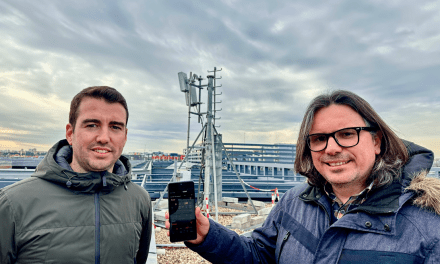
The operator conducted the trials in late April with Huawei at multiple live sites in Melbourne’s central business district (CBD) and suburbs.
"Based on our testing in the Melbourne CBD, NB-IoT would be able to penetrate two to three double-brick walls, enabling connectivity of objects in underground carparks and basements," said Benoit Hanssen, CTO of Vodafone Australia, in a statement on Tuesday.
Further trials across Australia are planned for the coming months.
NB-IoT can provide broad coverage to hard-to-reach places, supporting large numbers of low throughput, low cost devices that consume very little power. It has found favour with mobile operators because it makes use of their licensed spectrum.
"The benefits of NB-IoT include deeper and further coverage, up to 10 years battery life, increased scalability with up to 100,000 devices per cell and low cost of modem chipsets," Hanssen said.
"The types of products we could see utilising this technology are gas and water metering, smart bins, alarms and detectors, and parking monitoring," added Stuart Kelly, executive general manager of enterprise at Vodafone Australia.
Vodafone is a big believer in NB-IoT.
Together with Huawei, the operator in February opened an NB-IoT Open Lab in the U.K. Vodafone’s R&D director Luke Ibbetson is also chairman of the NB-IoT Forum, which was formed in November 2015 to advocate for the NB-IoT standard.
During Tuesday’s financial results presentation, Vodafone’s group CTO Johan Wibergh said that the company aims to deploy NB-IoT at all of the company’s 4G base stations by 2020.