

News
Nokia unveils network in a backpack for mobile coverage during emergencies, high-traffic events.
Compact, portable mobile networks appeared to be the talk of the town this week, with two of the industry’s biggest kit makers showing off their latest mini base stations.
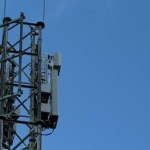
Vodafone UK announced on Tuesday that it is rolling out Ericsson’s briefcase-sized radio units to improve mobile network performance in London.
Half the size of a standard radio unit and more energy efficient, a field engineer can carry it to a rooftop, eliminating the disruption caused by having to use a crane.
The first mini base station has been installed in Southwark, London, and the rollout will continue across the capital and in other, undisclosed urban areas.
"We continue to look at new and innovative ways of providing improved mobile coverage in order to meet our customers’ soaring demand for mobile data and video while minimising disruption to the general public and improving the aesthetics of the surrounding area," said Jorge Fernandes, CTO of Vodafone UK, in a statement.
"We are delighted to be partnering with Ericsson, one of our key network suppliers, on this project and look forward to further engaging with local councils and government to look at ways of reducing red tape around site planning for mobile mast installations," he said.
Vodafone and Ericsson are also working together on three-band carrier aggregation (CA), combining the operator’s 800-MHz, 1800-MHz, and 2.6-GHz spectrum to improve download speeds.
In a recent trial that took place at select sites in London, the companies achieved a maximum throughput of 240 Mbps. According to Vodafone, these same sites are now capable of delivering a peak connection speed of up to 700 Mbps.
The briefcase-sized base stations that Vodafone is rolling out support three-band CA, Vodafone said.
While Ericsson opted for the professional, business-like radio unit in a briefcase, rival Nokia took a rugged, outdoors-y approach with its mobile network in a backpack.
Based on a small cell, the Ultra Compact Network is designed to provide 4G ad hoc coverage for high-traffic events like festivals, or in remote areas, or in situations where the macro network is compromised, such as a natural disaster.
Weighing in at 5 kg and only requiring 100 watts, a single unit can support up to 400 connections and has a cell range of 75 km. It can connect to fixed, microwave, or satellite backhaul networks too.
"We were very impressed with the capabilities of this lightweight, easily deployable small cell system," said Mansoor Hanif, director of RAN at EE, which trialled Nokia’s Ultra Compact Network during May.
"It is an ideal solution for disaster recovery and to deliver temporary coverage for both public and private sector customers," he said.