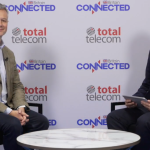


Facebook’s Mark Zuckerberg extended the hand of friendship to mobile operators at Mobile World Congress on Monday, recognising their efforts in rolling out infrastructure. However, signs of some tension between the operator community and the social network remained.
Mobile operators are doing a good job when it comes to extending connectivity to remote areas, but it’s a task that doesn’t come cheap, Zuckerberg said, noting that the industry is investing "tens of billions of dollars a year" in connectivity.
Companies like Facebook and Google, which are working on unusual ways to provide connectivity to rural areas, including the use of drones and balloons, are "at the fringe of the real work that’s going on," Zuckerberg said. "The real companies that are driving this are the operators."
The Facebook founder took to the stage to discuss Internet.org, a project designed to spread the availability of Internet access by offering certain basic services for free. Specifically, he sought to convince operators that the initiative will bring them new data users and bigger revenues.
"[There are] a lot of cases where ARPU goes up," Zuckerberg said.
"[It’s like] beauty and the beast," said Christian de Faria, CEO of Bharti Airtel Africa. "I think the beast is becoming more human."
Bharti offers Internet.org in four countries and says the experience has been positive.
"There has not been cannibalisation of revenue," said de Faria. "It is also for me an acquisition tool," to grow the subscriber base, he said, agreeing with Zuckerberg’s assertion that some customers end up using more voice.
Mario Zanotti, senior EVP for Latin America at Millicom, was similarly upbeat. The operator has launched Internet.org in Colombia and Tanzania and is working with Facebook on a similar offer in Paraguay.
Free Facebook "is for a limited time," Zanotti said, referring particularly to the Paraguay project. Afterwards, users often become paying subscribers, he said.
But Telenor CEO Jon Fredrik Baksaas was less moved than his peers by Zuckerberg’s conciliatory tone.
He reminded the audience that WhatsApp, the over-the-top messaging firm acquired by Facebook a year ago, has had an adverse effect on operators’ businesses.
"The messaging side is an important revenue driver in the old telecom world," he said. That has to change in the IP world. There is a natural tension between operators and Facebook, because operators don’t want to see the revenue stream move too quickly as a result of Internet.org stimulating usage, he said.
Zuckerberg assured him that apps like Facebook Messenger will not be part of Internet.org as that "would be cannibalistic."
He pledged to "work this out so it is a profitable model for our partners," adding that he hopes Internet.org will be sufficiently profit and revenue-driving that operators will be able to offer it to customers indefinitely.
But Baksaas is still not convinced.
"Does it increase the pie?" he asked of Internet.org at a separate press event on Tuesday. "We don’t have the supporting material for that yet."