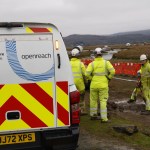


BT on Wednesday said the European Commission could learn from the U.K. incumbent’s Superfast Cornwall project, and warned that time is beginning to run out for reaching the EU’s broadband targets.
"I’ve presented the results of [the Superfast Cornwall] model all across Europe," said Ranulf Scarbrough, director of BT’s Cornwall Superfast Broadband programme, at Connected Britain. However, "outside the U.K., the story of rural broadband is not very good. There’s not much happening in places like Germany or Spain."
Building started on BT’s Superfast Cornwall project in October 2010 and is due to be completed this summer, at which point it will provide high-speed broadband coverage to 95% of premises, with 90% receiving speeds of more than 24 Mbps. A third of premises will be connected via fibre-to-the-home (FTTH).
The £132 million project was funded by a £78.5 million investmen t by BT and a £53.5 million contribution from the EU’s European Regional Development Fund.
Today, 65,000 premises are connected to either fibre-to-the-cabinet or FTTH, and 1,000 are being added every week. What’s more, there are 60 retail ISPs competing for customers via the network.
Last week, Cornwall Council agreed a £7.6 million deal with BT and Broadband Delivery UK (BDUK) – the government body in charge of allocating public funds for broadband deployments – that will see the final 5% of premises connected to the network.
Meanwhile, the EU has set a target of providing 100% of European premises with at least 30 Mbps broadband by 2020, with more than 50% receiving at least 100 Mbps.
"2020 is not that far off," warned Scarbrough. The Commission "probably do need to accelerate their focus on this."
The Superfast Cornwall programme is one that could serve as an example to other EU nations about how to extend broadband to rural, economically weak areas of their countries, he said.
"The learnings could do with being taken on board a bit more strongly," he said.