
News
The project saw a self-driving vehicle successfully operate in a live commercial setting
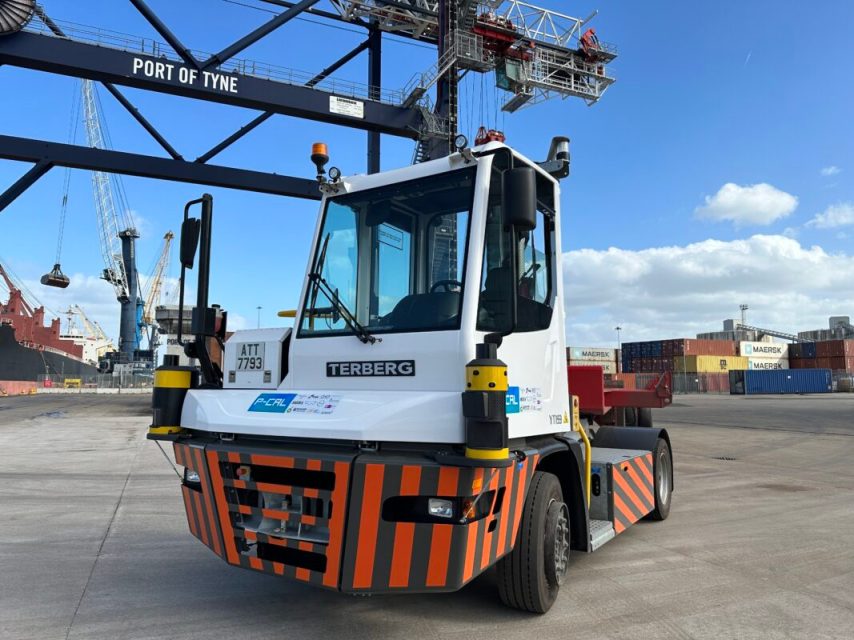
The P-CAL (Port-Connected and Automated Logistics) project has been completed at the Port of Tyne, bringing a major UK deep-sea port one step closer to autonomous operations.
The project saw a fully autonomous terminal tractor deployed on a working quayside for the first time, as well as the handling of commercial containers.
The project was carried out by a consortium including the North East Automotive Alliance (NEAA), autonomous vehicle specialist Oxa, and various industry and academic partners, alongside the Port of Tyne itself.
The pilot builds upon the consortium’s previous connected and automated mobility (CAM) projects, as part of the UK government’s £150 million CAM Pathfinder programme. These projects include 5G CAL, which showed that a 5G network could be used to support autonomous driving and teleoperation of a heavy goods vehicle (HGV), and the V-CAL project, which saw four autonomous HGVs operating in real-word scenarios.
The completed P-CAL project represents the next logical step towards commercial operations by integrating the autonomous HGVs with existing terminal systems, real-time coordinating with live cranes, deploying a mesh communication network, and implementing security protocols to enable secure remote and autonomous operations.
“Delivering autonomous logistics in a live port environment has been a major step forward for the sector,” said Graeme Hardie, operations director at the Port of Tyne. “P-CAL has shown what’s possible when innovation is applied to real operational challenges, improving safety, efficiency and sustainability.”
“Through the project, we’ve demonstrated that existing work vehicles can be turned into a digital workforce – successfully completing autonomous container movements in a dynamic quayside environment, while providing worksite intelligence necessary for real-time industrial optimisation,” added Oxa founder and CEO Paul Newman. “P-CAL provides a blueprint for how ports and industrial hubs worldwide can deploy autonomous technology to drive productivity, efficiency and safety.”
The next phase of the project will involve multiple vehicles working simultaneously in a live environment.
Autonomous vehicle operations have long been a goal for ports and other large scale industrial operations, potentially providing improved operational efficiency and reducing staff exposure to dangerous working conditions.
In the most advanced markets, these projects are already being launched commercially. In China, for example, the world’s largest autonomous mining fleet has been operational for almost a year.
Also in the news
Connected Britain Award winners 2025 announced!
Netomnia announces ‘powerful and ambitious’ rebrand ahead of Connected Britain
VodafoneThree drops Samsung, relies on Nokia and Ericsson for £2bn network upgrade