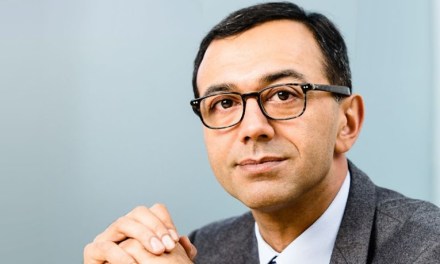


Germany’s global competitiveness is at risk if it continues to invest in copper networks, warned Vodafone Germany CEO Hannes Ametsreiter this week.
"I’m convinced that Germany and Europe’s future prosperity are dependent on a digital infrastructure," he wrote in an editorial that appeared in Handelsblatt on Wednesday.
"A country that prefers to extract the last remnants of capacity out of copper networks rather than investing in a future-safe fibre optic infrastructure is jeopardising its international competitiveness as a business and industry location," he warned.
According to the most recent statistics from the Fibre-to-the-Home (FTTH) Council, less than 1% of German homes subscribe to an FTTH service.
The industry body noted that FTTH momentum is growing in Germany, but it is being driven by alternative operators like Deutsche Glasfaser, while big players like Deutsche Telekom, Telefonica, and indeed Vodafone have focused the bulk of their fixed-line investments on fibre-to-the-cabinet (FTTC) and VDSL – exactly the sort of legacy infrastructure that Ametsreiter rails against in his editorial this week.
Nevertheless, he said it is vital to prioritise fibre and 5G in order to support emerging technology like automated driving.
"Google’s self-driving car generates around one gigabyte of data for every second of driving time. This example makes it clear that we need higher capacity infrastructures for the intelligent networking of raw data. Not just for our daily drive to work, but for our entire economy and society," he said.
Ametsreiter called on the government and private sector to work together to establish a framework that will foster the deployment of next-generation networks in order to regain lost ground on pioneering markets like South Korea, Japan and Singapore, markets that have recognised the significance of fibre optic infrastructure to their future prosperity.
"The corporate and political sectors share responsibility for ensuring that Germany is heading for a prosperous future and not for the industrial museum," he said.