
News
Huawei has launched its Global Industry Vision (GIV) 2025 report, which offers a near to mid-term glimpse into the future of the telecommunications sector
The GIV 2025 report was launched at Huawei’s annual Analyst and Media Summit in Shenzhen, China on Tuesday.
According to the report, by 2025 connectivity will reach a near ubiquitous state, ushering in a smart world where even inanimate objects are ‘smart’. The GIV 2025 report predicts that by 2025 the number of personal smart devices will reach 40 billion and the total number of connections around the world will reach 100 billion, creating a digital economy worth $23 trillion.
During the launch of the report, William Xu, director of the board and chief marketing strategy officer for Huawei, provided an insight into the motivation for launching the report.
"This is the first time that Huawei has released the GIV report. Based on data and predictions about the future, we aim to unfold the industry blueprint of an intelligent world driven by information and communications technology (ICT). It is our goal to build the foundations that will enable the diverse ICT industry ecosystem to truly transition into the intelligent world, and team with our global partners to build this fully connected, intelligent world," he said.
Xu also drew attention to a number of smart city initiatives that Huawei has been involved in, which showcase the potential of a truly connected world.
In a recent smart-government initiative with the Longgang district of Shenzhen in China, Huawei was able to boost service launch efficiency by 50%. It was also able to reduce the time needed to obtain an exit / entry permit to and from Hong Kong and Macau from 7 working days to just 2 minutes.
Further afield, Huawei worked with the police department of Nairobi in Kenya to reduce the crime rate. Through the installation of smart cameras and security infrastructure, the smart system reduced he number of annual crimes from 7,288 to 4,383 a reduction of 46 per cent.
In Yanbu, Saudi Arabia, authorities saw a 16 per cent increase in inbound investment, with the economic zone attracting $100 million of domestic and international investment, following the implementation of the city’s smart city initiative.
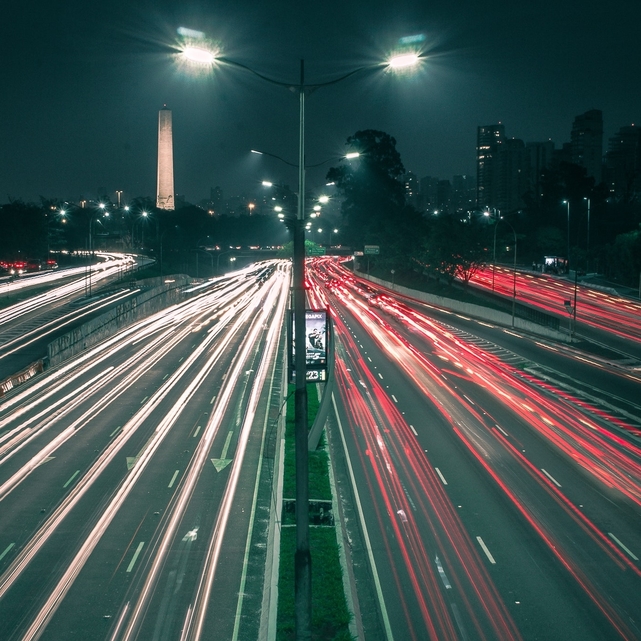
Xu also highlighted an environmental initiative with the Chinese city of Weifang, where electricity consumption for street lighting was reduced by 45 per cent.
You can view Huawei’s GIV 2025 report here.