News
The operator says that supplying its more than 12,000 mobile mast sites with back-up batteries would be too expensive
In December, Ofcom launched a consultation on network resilience, noting the increasing importance of connectivity in our daily lives and subsequently of network outages’ disruptive impact. Indeed, the consultation seems to be partly inspired by the disruption caused by recent winter storms, as well as the ongoing shut down of the Public Switched Telephone Network (landlines).
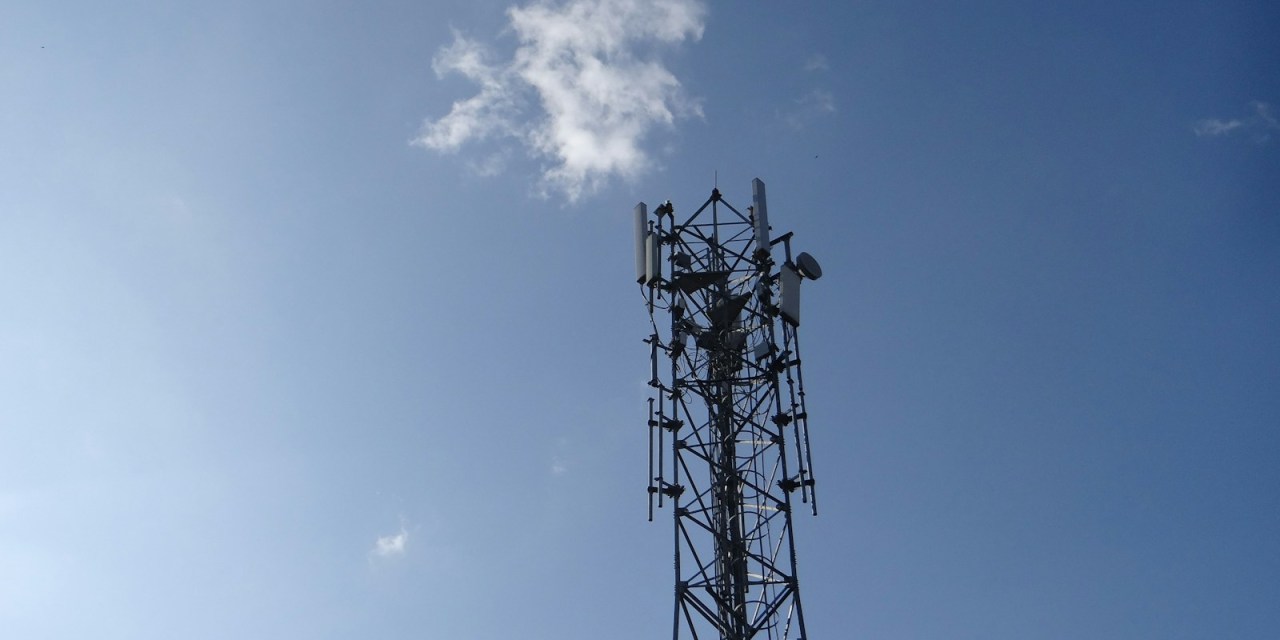
As part of the consultation, Ofcom sought industry feedback on the topic of providing backup batteries for mobile sites, ensuring that they can remain operational even when the primary power source fails.
This week, mobile operator Vodafone UK has shared its thoughts on the matter, arguing that providing batteries for each of its over 12,000 sites around the country would be a prohibitively complicated and expensive endeavour.
Currently, some but not all the UK’s mobile mast sites are supported by a redundant power supply, usually in the form of batteries or diesel generators. Those without backup power are fully reliant on the local power grind, hence a blackout can also mean an outage of the local network.
So why aren’t all mobile sites backed up by a secondary power source?
As is so often the case, the answer is cost. Long-lasting, durable batteries are expensive to purchase and deploy, particularly true of urban areas, where complex planning permission processes and opportunistic landlords further bloat the cost of deployment. As a result, operators are often content to leave these sites without backup energy, relying on any power outages to be over quickly or localised to a small area (such as a single building losing power) where neighbouring mobile infrastructure can pick up the slack.
In its response to Ofcom’s consultation this week, Vodafone UK says that the UK’s operators cannot be expected to make these investments without significant support, suggesting a shared funding model could be the solution.
“The Mobile Network Operators cannot be asked to shoulder this financial burden alone. Building redundancy into every element of the network would be another significant investment, in addition to the 5G and full fibre ambitions that we share with Government,” said Nicki Lyons, Vodafone UK’s Chief Corporate Affairs and Sustainability Officer.
“Vodafone is proposing a shared funding model. The Mobile Network Operators would of course be contributors, but so would the Government, the utility companies that we pay to provide secure and reliable energy services, and the cloud companies that have benefitted significantly from the mass adoption of mobile and the countrywide rollout of networks, but have not contributed financially in any material manner. The shared funding model would be holistic, avoiding any disproportionate impact on any one industry or company.”
Lyon’s noted that some countries, such as Australia, offered government subsidies when asking operators to make their networks more resilient (in this case, specifically to tackle natural disastrs). In contrast, she also highlighted markets like Japan where operators were forced to bear these costs alone, subsequently driving up consumer prices.
Naturally, these comparisons are too simplistic – the Australian and Japanese markets are highly distinct from the UK’s, with many other factors impacting government policy and service pricing – but Lyon’s implication is clear enough: costs will need to be passed on to customers if the government does not find some way to support any proposed battery rollout.
But should the government, utility companies, and other stakeholders be forced to pay for these upgrades? This question is reminiscent of the ongoing ‘fair share’ debate, which argues that Big Tech firms that rely so heavily on telecoms networks and make up so much of the data traffic should be obligated to help pay for network infrastructure.
With telecoms networks increasingly underpinning the very workings of our society, the question of who pays seems to be growing increasingly murky.
Join in the discussions on network resilience, sustainability, and more at this year’s live Connected North conference in Manchester
Also in the news:
South Korean president backs semiconductor mega cluster investment
Malaysia to launch second 5G network alongside DNB
BT signs connectivity deal with Iraqi gas firm